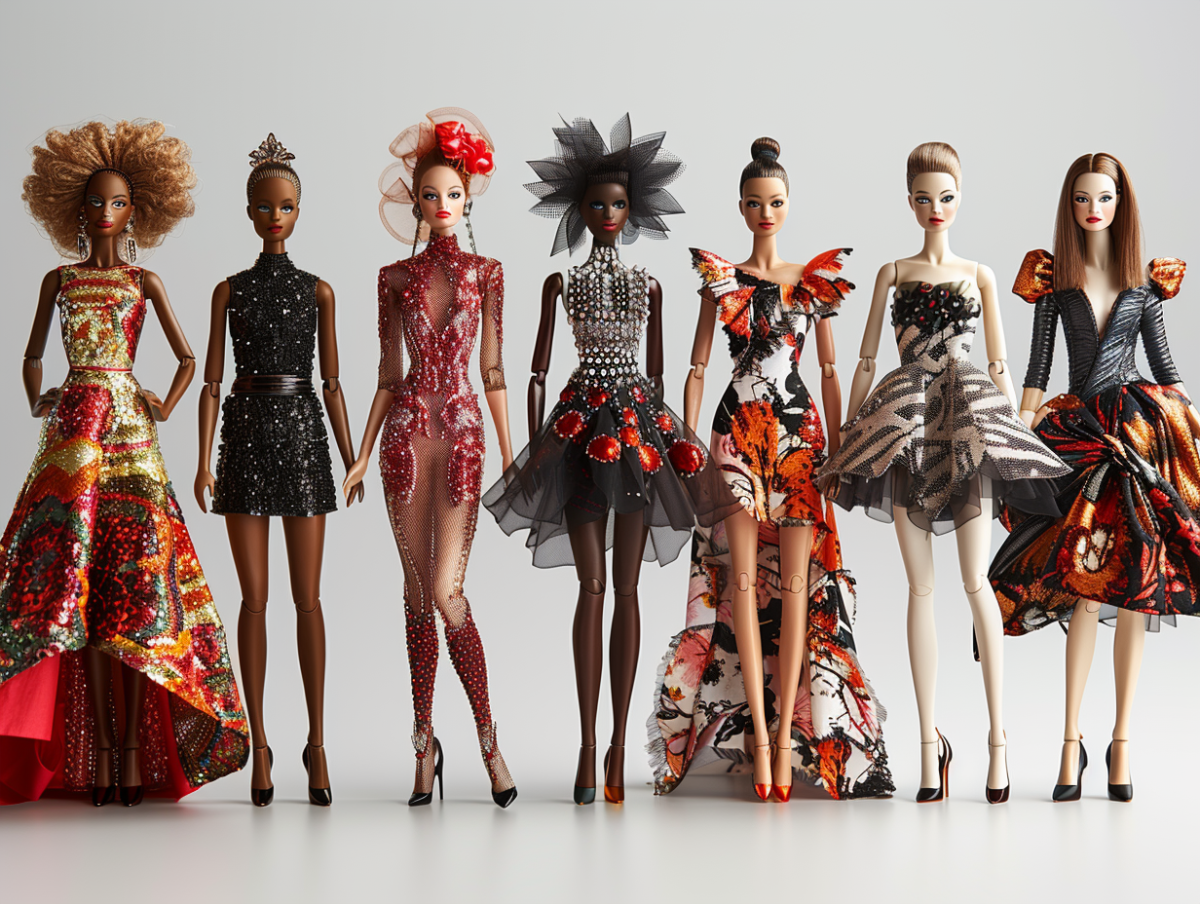
The measurements of fashion icons have long been considered beauty standards that strongly influence body image in society. By observing the evolution of silhouettes showcased on runways and in advertising campaigns, notable changes can be seen. This detailed examination of the proportions of illustrious figures in the fashion industry allows us to discern how they measure against one another, and what influence these ideals have on contemporary aesthetic norms. This analysis also raises important questions about body diversity and inclusivity in today’s fashion world.
Evolution of Beauty Standards in the Fashion Industry
Fashion, a reflection of its time, renews itself in a perpetual dialogue with society. The work of Alain Quemin, a professor of sociology of art and fashion at the University of Paris VIII and co-author of the study “For a Sociology of Fashion and Clothing”, highlights the significant social function of clothing. Fashion, far from being a mere matter of aesthetics, conveys norms, values, affiliations, and aspirations. The exhibition ‘Model Clothing’ presented by the Mucem is a striking illustration of this, showcasing pieces as diverse as the tank top, espadrille, or kilt, which have traversed eras and social classes, fitting into both workwear and popular basics.
However, fashion norms are difficult to circumvent, and their influence is omnipresent, as Alain Quemin points out. Clothing such as joggers or workwear, once confined to strict functional use, now finds its way into designers’ collections. This phenomenon of appropriation and reinterpretation of basics by the fashion industry illustrates the fluidity with which the boundaries between different clothing registers are constantly redefined. Emily Ratajkowski’s size carves a path in this sphere by displaying measurements that contrast with traditional fashion standards, thereby signifying an evolution of beauty standards.
The iconic pieces of the exhibition at the Mucem, scrutinized under the attentive gaze of personalities such as Agnès b. or Vivienne Westwood, testify to this mutation of clothing codes. The jean, Alain Quemin’s garment of choice, symbolizes this transition: once a simple work garment, it is now a staple in the global wardrobe, prized for its comfort and ability to adapt to all body types. The sociological analysis of fashion and clothing reveals an industry in constant evolution, where beauty standards are continually redefined, reflecting the social and cultural changes of our time.

Comparison of Current Measurements of Fashion Icons with Historical Standards
The field of fashion, often perceived as ephemeral and superficial, proves to be an accurate mirror of societal evolutions. The measurement and analysis of the measurements of today’s fashion icons, compared to historical standards, reveal much more than mere numbers. These data, the result of meticulous collection and comparison work, unveil deep trends in perceptions of beauty and the ideal body. The slender silhouette, long held as a model, is gradually giving way to more diverse shapes, reflecting an expansion of aesthetic canons.
The bar graphs, timelines, and comparative curves draw a visual history of fashion and the favored morphologies. In light of these graphical representations, the outlines of a changing industry emerge, where the mass and body composition of models are diversifying. The powerful tool of graphical representation allows for a clear visualization of the evolution of fashion icons’ measurements, from muscle mass to body fat, including body water percentage.
In this dynamic, the social function of clothing takes on a new dimension. The analysis of current measurements, compared to those of past decades, reveals not only a change in fashion choices but also in the values conveyed by those choices. The study published in “Sociologie et Sociétés” by Clara Lévy, co-author with Alain Quemin, emphasizes the importance of considering fashion as a reflection of social changes and individual aspirations.
Consider the historic decision of the airline Air France, which allowed hostesses to wear pants, or the impact of personalities such as Agnès b. and Vivienne Westwood, present at the ‘Model Clothing’ exhibition, on the redefinition of clothing codes. These events testify to the fundamental role of fashion in the representation and affirmation of identities. The fashion industry, far from being limited to the surface, shapes and is shaped by the deep layers of contemporary societies.