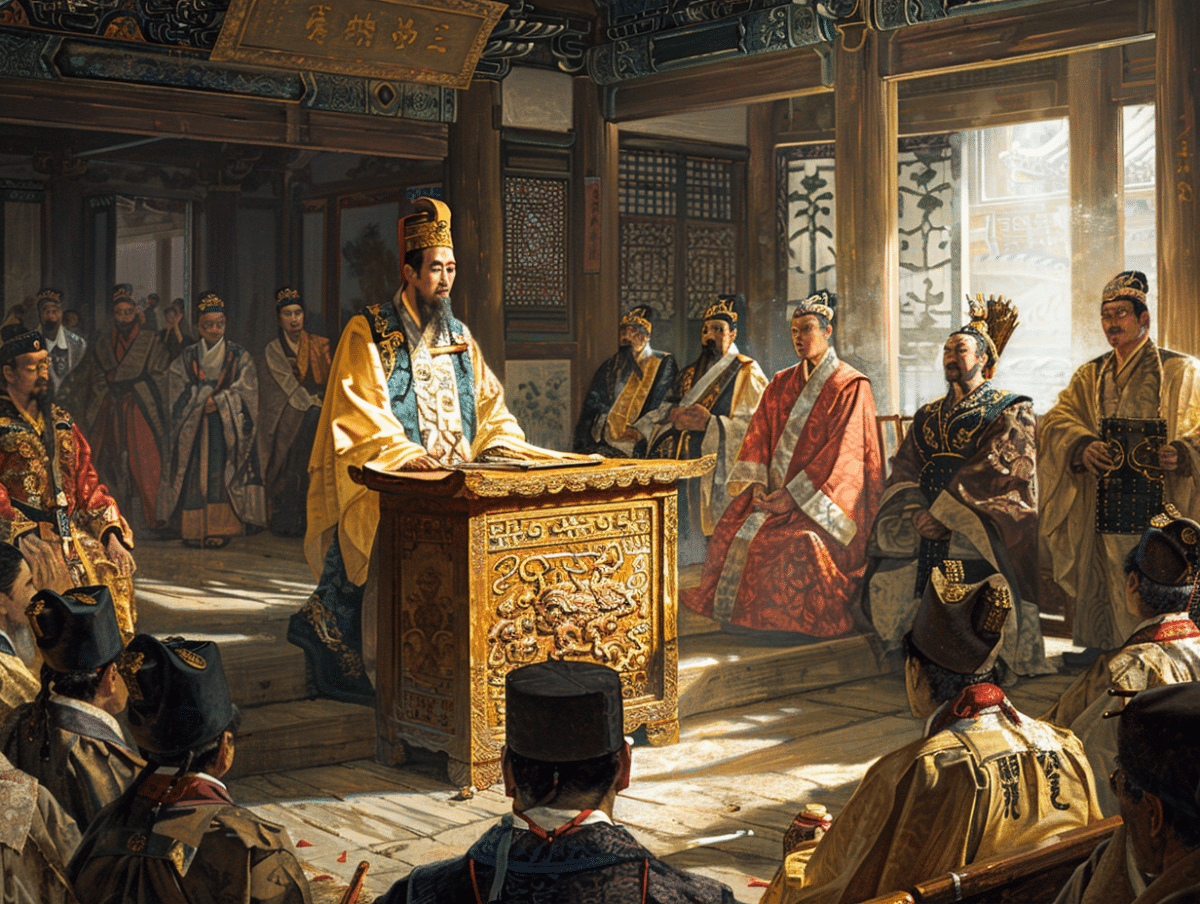
Ancient Asia, with its vast empires and complex dynasties, is filled with stories where extreme punishment methods reflect the rigor of the judicial systems of the time. In China, the Qin dynasty was notable for its severe practices such as lingchi or the death by a thousand cuts, a slow and painful execution intended to inspire terror and submission.
In Japan, the application of seppuku, a ritual suicide reserved for samurai, reflected a strict code of honor where failure in duty could lead to self-inflicted death, often in public. These practices, although cruel, served to maintain order and reinforce the authority of the rulers.
The origins and practices of extreme punishments in ancient Asia
The civilizations of ancient Asia, particularly in China, developed rigorous punishment systems to maintain social order. Under the Qing and Ming dynasties, laws were strictly enforced by the Ministry of Punishments. The judges and jurists of the time were tasked with ensuring that judgments and legal reforms reflected imperial will.
The Chinese judicial system included various penalties ranging from death penalty to corporal punishments:
- Beating, for example, was commonly used to punish minor offenses,
- While more serious crimes could lead to servitude, banishment, or even exile.
The Ministry of Punishments also oversaw accessory penalties, which included additional sanctions to the main punishment.
Corporal punishments and bamboo torture
Some punishment methods, such as bamboo torture, were particularly feared. This technique involved inserting bamboo shoots under the nails of the condemned, causing extreme pain. These practices served not only to punish but also to deter potential criminals.
Corporal punishments and death penalties were often carried out in public to reinforce the authority of the rulers and deter criminal behavior. Exiles and banishments removed criminals from the center of power, confining them to isolated regions or prisons run by the imperial administration.
Extreme punishments in ancient Asia reflected a desire to control and structure society through fear and repression, rooted in a rigid and hierarchical legal framework.
The cultural and social impacts of extreme punishments in ancient Asia
The extreme punishments imposed in ancient Asia had profound effects on society. They served to reinforce imperial authority and maintain order within the imperial territory. Criminals and convicts were often used as examples to deter the population from committing offenses.
Public torture and executions also aimed to create a climate of fear. Corporal punishments and the death penalty were not only means of punishment but also served to continuously remind of the omnipotence of the empire. The imperial administration ensured that these punishments were spectacular and widely disseminated.
The social consequences of repression
The extreme punishment methods deeply affected social structures and community relations. The families of the condemned often faced social and economic repercussions. The constant fear of extreme punishment contributed to heightened social control, but it also generated ongoing tension within communities.
The boundaries of the imperial territory were often marked by exiles and banishments:
- These punishments removed criminals from the royal domain,
- Confining them to remote areas where they were often used as forced labor.
This physical and social distancing accentuated the gap between centers of power and peripheral areas.
Extreme punishments in ancient Asia were not limited to the mere application of justice: they were instruments of social and political control, deeply integrated into the structure of the empire.