The MAGA (Agricultural Self-Propelled Machine) certification classifies a quad in the same regulatory category as a combine harvester or a self-propelled harvesting machine. This classification under the agricultural tractor category on the registration certificate (field J.1: TRA) determines the maximum allowed speed, the required license, applicable taxation, and road circulation conditions. Understanding this technical framework allows for an assessment of whether this certification corresponds to actual operational use.
Speed Limitation and Tractor Category: What MAGA Changes on the Registration Certificate
A MAGA-certified quad is limited to a speed between 25 and 40 km/h depending on the model. This restriction directly stems from its classification among self-propelled agricultural machines, similar to slow harvesting equipment.
On the registration certificate, field J.1 indicates the national type TRA. This designation distinguishes the MAGA quad from a conventional motorized quadricycle (type QM), which falls under a completely different regulation. An article detailing the MAGA certification of quads on AXX Auto specifies the concrete implications of this classification on the owner’s obligations.
The required license remains accessible: minimum age of 18, or 16 for an agricultural operator. A category A or B license is sufficient, without any specific training related to agricultural machinery.

MAGA Quad and T3 Certification: Technical Differences to Know Before Purchase
Confusion between MAGA and T3 is common. Both belong to the agricultural tractor category, but the T3 category allows speeds of up to 60 km/h. For an operator whose plots are far from the operating base, this speed difference impacts daily travel times.
The MAGA certification limits speed but simplifies the administrative framework. No maximum power is imposed, allowing for a choice among various engine types. The number of seats depends on the vehicle, not the category.
The T3 category offers more flexibility for long road trips. However, the equipment and technical compliance obligations are comparable between the two certifications. The choice is therefore primarily based on one criterion: the average distance traveled on the road between plots.
Tax Benefits and CAP Subsidies for MAGA Certified Quads
One of the major attractions of the MAGA certification lies in access to financial mechanisms reserved for agricultural equipment. A quad classified as a self-propelled agricultural machine can be included in the operating assets register and subject to accounting depreciation.
The CAP subsidies extended to versatile road-field vehicles have contributed to a significant increase in MAGA registrations among agricultural operators in recent years. This financial lever makes the MAGA quad more competitive to purchase than a conventional road quad, despite its speed limitation.
- Depreciation of the vehicle on the operating balance sheet, like any agricultural equipment recorded as an asset
- Eligibility for CAP aids targeting investments in versatile equipment for operations
- Exemption or reduction of certain taxes related to agricultural utility vehicles, depending on the department
A quad without agricultural certification does not grant access to any of these mechanisms. The QM registration certificate (motorized quadricycle) excludes the vehicle from the agricultural tax perimeter.
Resale of MAGA Quads in the Used Agricultural Market
Competitors focus on new purchases, but resale deserves distinct analysis. A quad bearing a MAGA certification retains its agricultural tractor classification at the time of property transfer. The subsequent buyer thus benefits from the same tax advantages and access to subsidies as the first owner.
This maintenance of status creates a concrete advantage for resale in the secondary agricultural market. An operator who buys a used MAGA quad can directly register it in their assets, without re-certification procedures. In contrast, a QM certified quad resold to a farmer does not grant any specific tax rights.
Field experience confirms the versatility of these vehicles in real conditions: notable reduction in inter-plot travel times and increased reliability in wet conditions compared to non-certified models. These usage qualities are reflected in the second-hand demand, where MAGA quads find buyers more quickly than their non-agricultural classified counterparts.
Technical Inspection and Regulatory Developments for Agricultural Quads
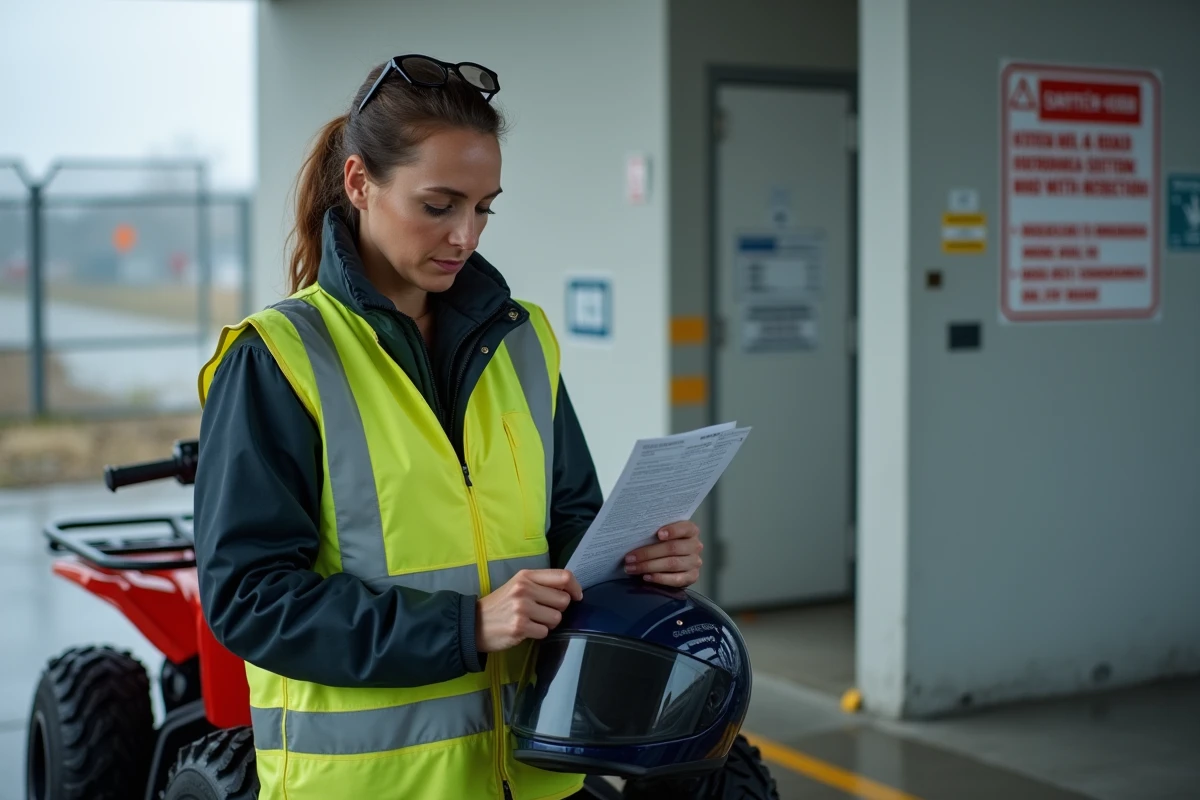
The regulatory framework is evolving. Some quads and SSVs will soon be subject to technical inspection, a measure that directly affects certified vehicles operating on public roads.
For MAGA quads, this prospect reinforces the interest in having a compliant vehicle from the outset. A quad already certified and equipped according to current standards (lighting, signaling, braking) will pass the inspection without major modifications. A non-certified quad, however, must be brought into compliance before any presentation.
- Complete lighting (front, rear lights, turn signals) compliant with road traffic requirements
- Braking system verified and operational on both axles
- Readable registration plate and up-to-date registration certificate with TRA mention
- Mirrors and horn in working condition
A MAGA compliant quad from the start simplifies every administrative step, from registration to resale and future technical inspection. This inherent compliance constitutes an additional argument against quads declared afterwards or operating without valid certification.
The choice of a MAGA quad is evaluated on three concrete axes: the road distance between plots (which determines if the speed limit is an issue), access to agricultural tax mechanisms, and resale value in the second-hand market. These technical criteria weigh more than the catalog price in the real operating cost over several years.