Fresh yeast and dry yeast have significant differences. The former is more delicate to handle as it degrades quickly. The latter is more convenient to use as it has a long shelf life. Dry yeast is also more concentrated, allowing for less to be used. To replace 25g of fresh yeast, you should use 8g of dry yeast. Be sure to dissolve it in warm water before adding it to the mixture. To succeed in baking, it is advisable to store dry yeast in a cool, dry place, rehydrate it before use, and respect the resting times.
The differences between fresh yeast and dry yeast
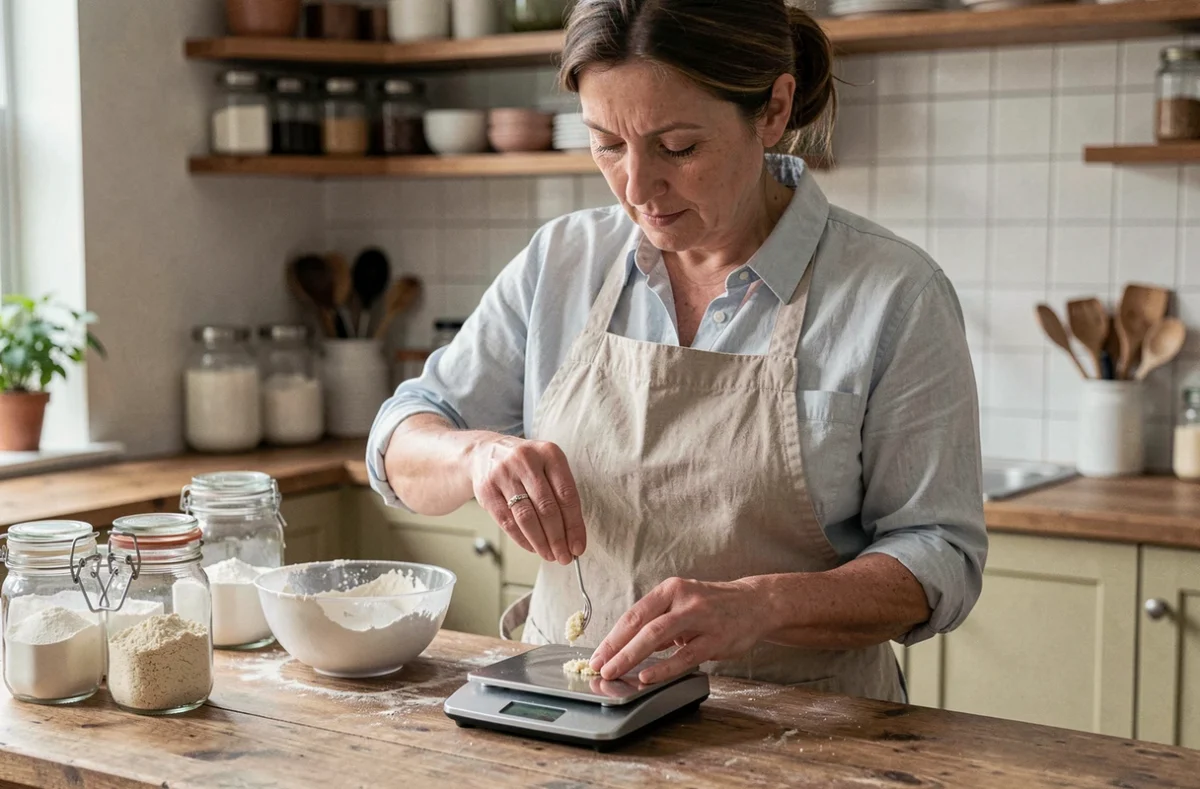
When you want to replace 25 g of baker’s fresh yeast with dry yeast, it is essential to take a meticulous approach to achieve an optimal result. It is indeed important to specify that to obtain a precise match with the dry substitute, you need to use about 8 grams.
However, adjusting the proportions is not enough; it is also important to be aware of the instructions on the packaging of the chosen dry substitute. Some manufacturers recommend a pre-activation before use by adding a few drops of warm water and/or a little sugar to the dry substitute. This method allows the dormant cells of the dry product to wake up so that it acts like the fresh version.
In summary, if you follow these instructions rigorously, you can be assured that your recipe will be a success! You will no longer have to worry if ’25 g of fresh yeast is equivalent to dry yeast‘.
The advantages of dry yeast
In addition to its convenience, dry yeast has other advantages. It allows for a slower and more consistent fermentation than fresh yeast. This results in bread with a finer texture and more developed aromas.
Dry yeast can be used to make gluten-free bread or special breads enriched with ingredients such as nuts or dried fruits. The high concentration of living cells in dry yeast also allows for better adaptation to these types of flours.
Baking enthusiasts will also appreciate that the taste is not altered by the use of dry yeast. Unlike other leavening agents, it has no effect on the flavor of the final product.
It should be noted that there are two types of dry yeast: active (to be dissolved in a liquid) and instant (which can be added directly dry). The major advantage of the latter is that it requires no prior rehydration, greatly simplifying its use in cooking.
However, it is important to be vigilant about its storage: keep it cool and avoid any moisture as this could damage its leavening properties.
How to replace 25g of fresh yeast with dry yeast
Replacing fresh yeast with dry yeast is a fairly simple and common operation in baking. If you are short on time to go get your packet of fresh yeast from the store or if you simply want to reduce the number of trips, using the dehydrated version can be an excellent option.
The proportions for replacing the 25 g are simple: just use 8 grams of dry yeast. That said, before anything else, make sure that this substitution will not negatively affect the final taste of the product.
Rehydrate the necessary amount in a bowl containing about four times its volume in warm water (about 40 milliliters). Ensure that the water temperature is between 35°C and 40°C to reactivate the dormant cells.
Let it rest for about five minutes until bubbles form on the surface of the mixture.
Then add this liquid mixture to your dry ingredients • flour, sugar, and salt • while making sure to mix well until you obtain a homogeneous dough.
The good news with this method is that it also ensures that the bread or other finished products have an increased shelf life due to the fact that less yeast is used overall.
Tips for using dry yeast effectively in baking
• Ensure that your dry yeast is fresh and not expired. You can check the expiration date on the packaging or test its vitality by dissolving a little yeast in warm water with a pinch of sugar. If bubbles form on the surface after a few minutes, your yeast is still active.
• Make sure the water is warm (about 37°C) when rehydrating the dry yeast. Water that is too hot could damage the living cells present in the yeast.
• You should add a small amount of sugar or honey to the water before adding the dry yeast. The sugars will nourish the cells and facilitate their multiplication.
• Let the mixture rest for about 10 minutes so that the cells can rehydrate and begin their enzymatic activity, which will allow the breads and other baked preparations to rise.
• Always respect the activation time indicated on each package, as this usually varies between 5 and 15 minutes depending on the type of product used.
Using the different types of baking products correctly often requires much more than just a simple precise measurement as described above.