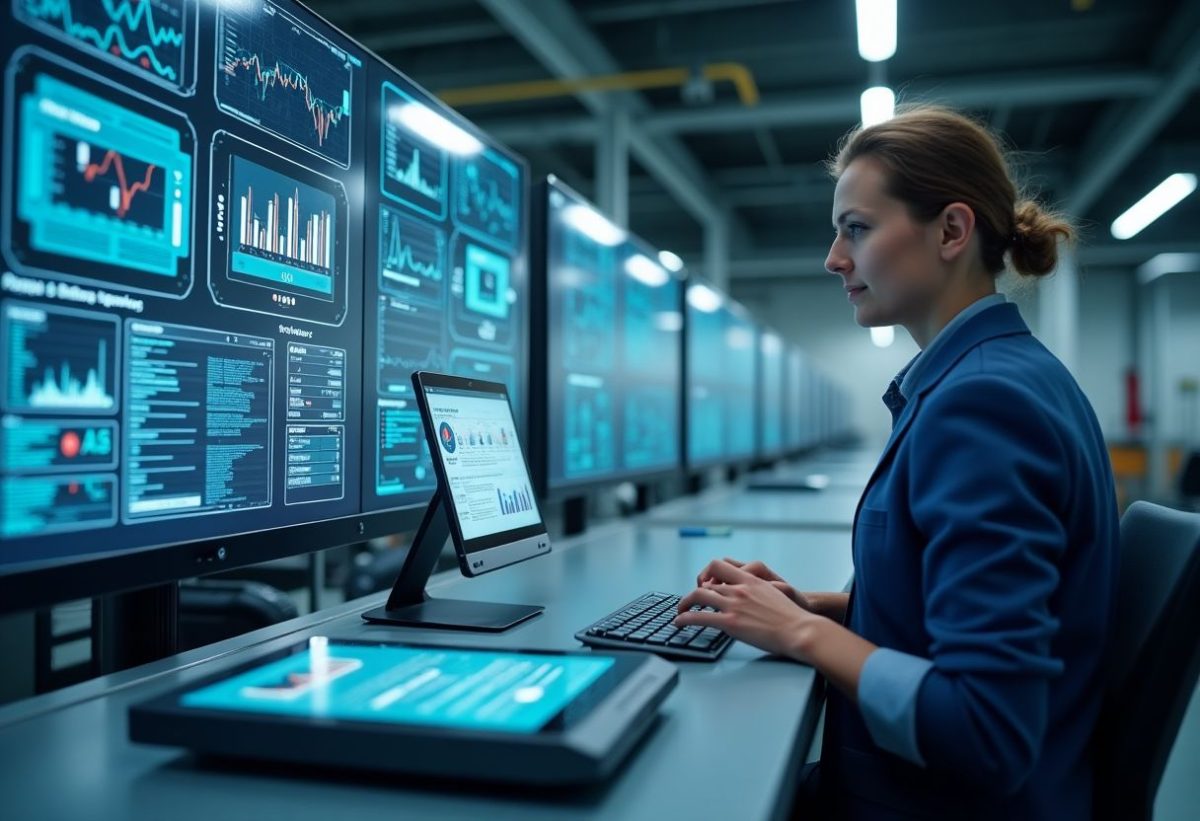
Digital transformation has profoundly changed the industrial landscape, and Industrial ERP plays a central role in this evolution. Manufacturing companies, faced with increasing demands for efficiency and flexibility, rely on these systems to integrate and optimize their processes. From global supply chains to internal operations, the Industrial ERP is at the heart of the innovation strategy.
But how does this system manage to turn complex challenges into opportunities?
The Foundations of an Industrial ERP
An Industrial ERP is based on a set of integrated modules that cover various aspects of the business. These modules allow for smooth and coherent management of industrial operations.
- Production Planning: Determines the necessary resources and production timelines, ensuring optimal coordination.
- Inventory Management: Optimizes inventory to avoid shortages or excesses, thus ensuring a constant flow of materials and products.
- Order Tracking: Ensures traceability and tracking of customer orders, from receipt to delivery.
- Financial Management: Centralizes accounting and financial operations, facilitating the production of accurate reports and analyses.
Concrete Benefits for Companies
Implementing an Industrial ERP brings a multitude of tangible benefits that translate into a noticeable improvement in organizational performance. These advantages are not limited to process optimization but also encompass strategic and financial dimensions.
Companies often see a significant reduction in operational costs due to better resource management and a decrease in human errors. Data transparency facilitates quick decision-making, which is crucial in a sector where responsiveness is key. Furthermore, the system allows for increased customization and flexibility, making it possible to adapt quickly to changing market needs.
By centralizing information, it strengthens internal communication and improves collaboration between different departments.
Integration with Emerging Technologies
Adopting an Industrial ERP does not simply mean improving existing processes, but also integrating cutting-edge technologies to anticipate future trends and prepare the company for tomorrow’s challenges.
Industrial companies that invest in modern ERPs benefit from integration with the Internet of Things (IoT), which offers real-time monitoring of equipment and operations. Artificial intelligence and machine learning also enable the anticipation of maintenance needs, thus avoiding costly downtime.
Blockchain, for its part, ensures the security and traceability of data, thereby enhancing trust among business partners. This synergy between ERP and emerging technologies allows companies to maintain their competitiveness and stay at the forefront of innovation.
The Challenges of Implementation
Although the benefits are numerous, implementing an Industrial ERP is not without obstacles. Understanding and managing these challenges is essential for a successful transition.
- Resistance to Change: Employees may be reluctant to adopt new technologies, requiring training and awareness programs.
- Implementation Cost: Deploying an ERP is often expensive, which can be a barrier for some organizations.
- Integration Complexity: Integrating an ERP into existing systems requires technical expertise and careful planning.
- Data Security: With the rise of cyber threats, ensuring the protection of sensitive information is imperative.
By carefully navigating these challenges, companies can not only benefit from a successful implementation but also leverage their ERP to reach new heights in efficiency and innovation.