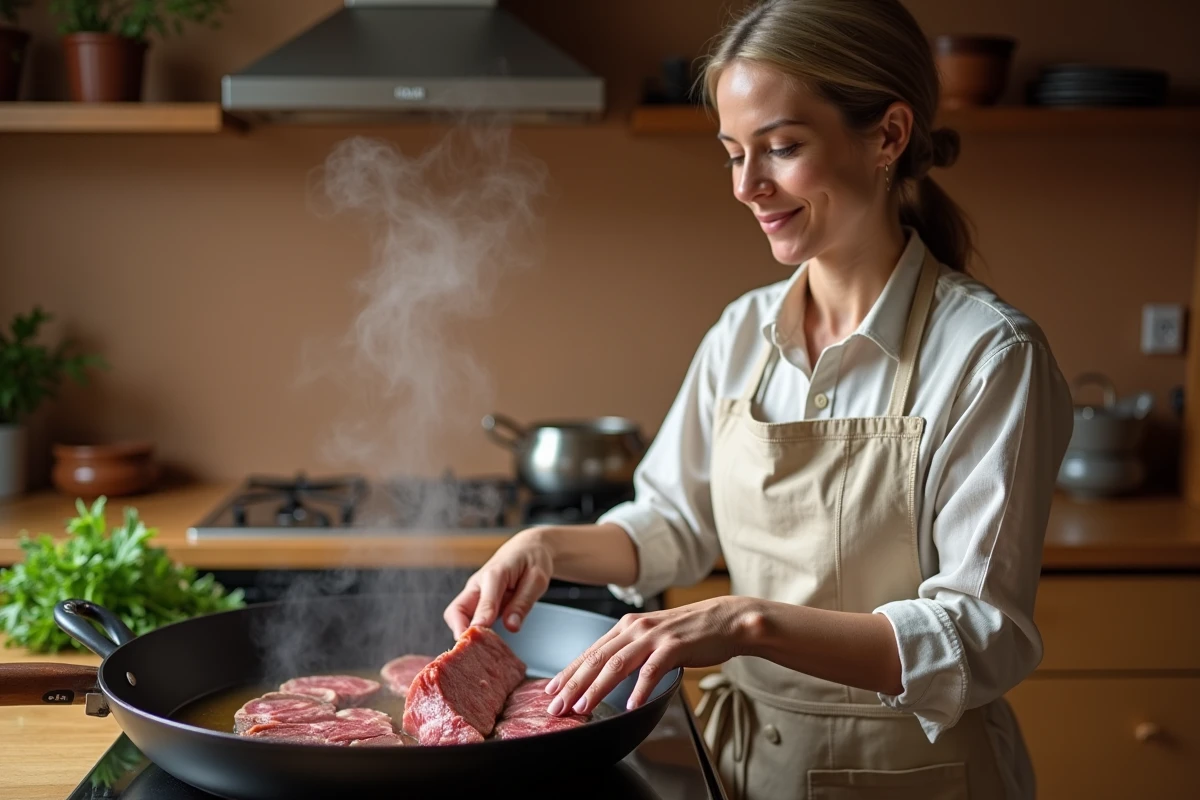
Reheating already cooked meat presents a measurable problem: moisture loss. Between the oven, skillet, microwave, and sous vide, the differences in tenderness and juiciness are clear. This article compares the main reheating methods based on the key parameters: temperature, duration, and protection against evaporation.
Comparison of reheating methods: temperature, duration, and moisture retention
| Method | Temperature | Indicative Duration | Moisture Protection | Risk of Overcooking |
|---|---|---|---|---|
| Low-temperature oven | 120-150 °C | 10 to 15 min | Aluminum foil + cooking juices | Low |
| Oven + searing in cast iron skillet | 120 °C then very hot skillet | About 30 min + quick sear | Maillard crust at the end of the process | Low if controlled |
| Skillet on low heat | Low heat, lid | Several minutes | Fat + lid | Moderate |
| Microwave (reduced power) | Power 50% or less | Very short, in intervals | Film or damp dome | High |
| Sous vide (water bath) | Around 55-60 °C | Variable depending on thickness | Sealed bag, no evaporation | Very low |
The table highlights a central point: the lower the reheating temperature, the more the meat retains its juices. Sous vide nearly eliminates all evaporation but requires equipment. The low-temperature oven remains the best compromise between accessibility and results.
To delve deeper into each technique and their variations depending on the type of meat, you can reheat already cooked meat with Double Portion and adjust the parameters to your recipe.
Fat coating before reheating: the factor that classic recipes overlook
Most guides focus on oven temperature or microwave duration. One parameter often takes a back seat: the addition of a fat coating before reheating. Applying a thin layer of neutral oil or clarified butter on the surface of the meat limits juice loss, especially on sliced white meats.
This action acts as a physical barrier. The fat melts slowly and forms a film that slows down the evaporation of water contained in the muscle fibers. On a sliced roast beef or chicken breast, the difference in tenderness is noticeable from the first bite.
Specifically, here’s how to proceed depending on the type of cut:
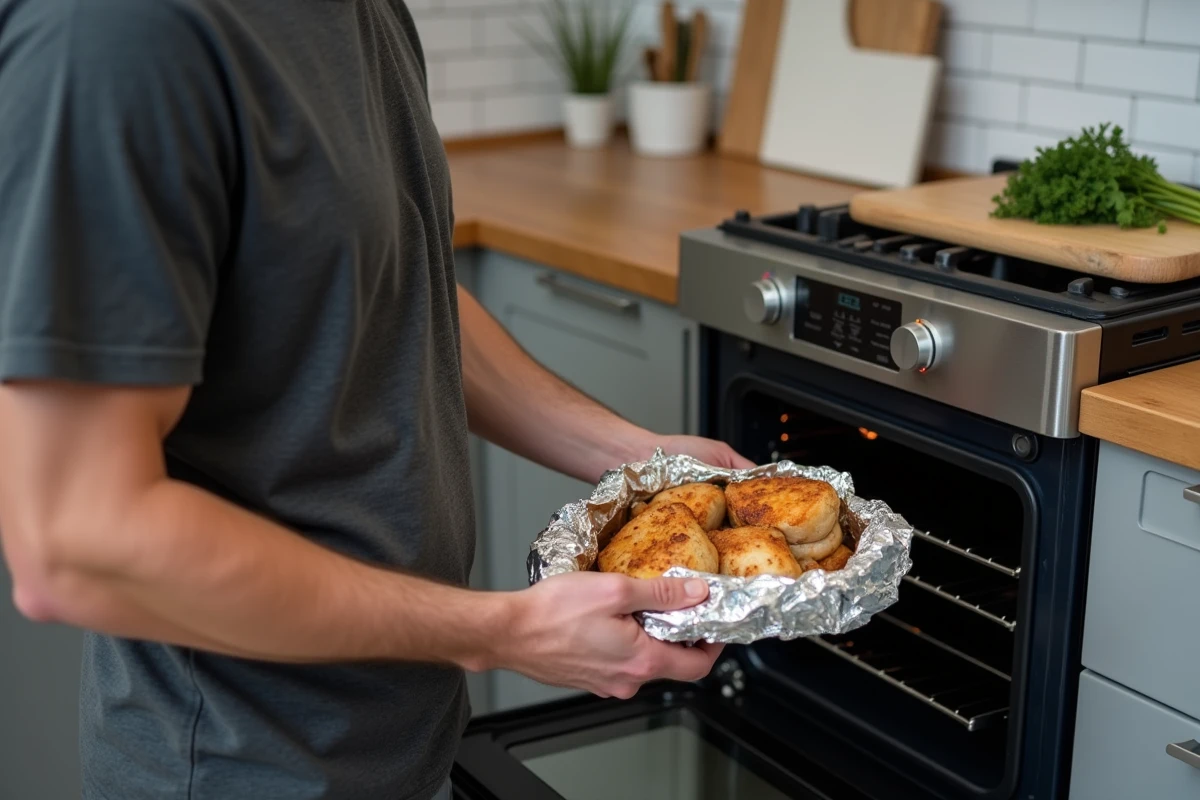
- On sliced red meat (roast beef, leftover steak), lightly brush with clarified butter before placing in the oven at low temperature under aluminum.
- On poultry (chicken breast, thigh), apply a thin layer of neutral oil (canola, sunflower) and then reheat in a covered oven, adding a spoonful of broth to the bottom of the dish.
- On a fatty cut (brisket, pulled meat), the additional coating is less necessary, but a very slow reheating finished with a brief period at high heat yields the best results by preserving moisture while reviving the crust.
Reheating meat in the microwave: why the results often disappoint
The microwave agitates the water molecules contained in the meat. This agitation generates heat, but it also causes rapid and localized evaporation. The result: hot spots next to still cold areas, and a texture that turns rubbery in just a few seconds too long.
However, reducing the power to half and proceeding in short intervals (about ten seconds, then checking) limits the damage. Placing a container of water in the microwave or covering the meat with a damp cloth maintains a more stable humidity level inside.
The microwave remains the least reliable method for preserving tenderness. Its only real advantage is speed. For a quality steak or roast, the other options in the table produce significantly better results.
Single reheating cycle rule: food safety and texture
A food safety point often overlooked in popular articles: cooked and refrigerated meat should not be reheated multiple times. Professional guides recommend a single cycle: cooling, cold storage, reheating, serving. No returning to the refrigerator between reheatings.
This constraint is not just sanitary. Each additional thermal cycle contracts the muscle fibers and expels more juice. A second reheating results in meat that is significantly drier than the first, regardless of the care taken with the method.
The best practice is to portion leftovers before storing them. Reheating only the amount needed for the next meal avoids waste and preserves the quality of the remaining portions in the refrigerator.
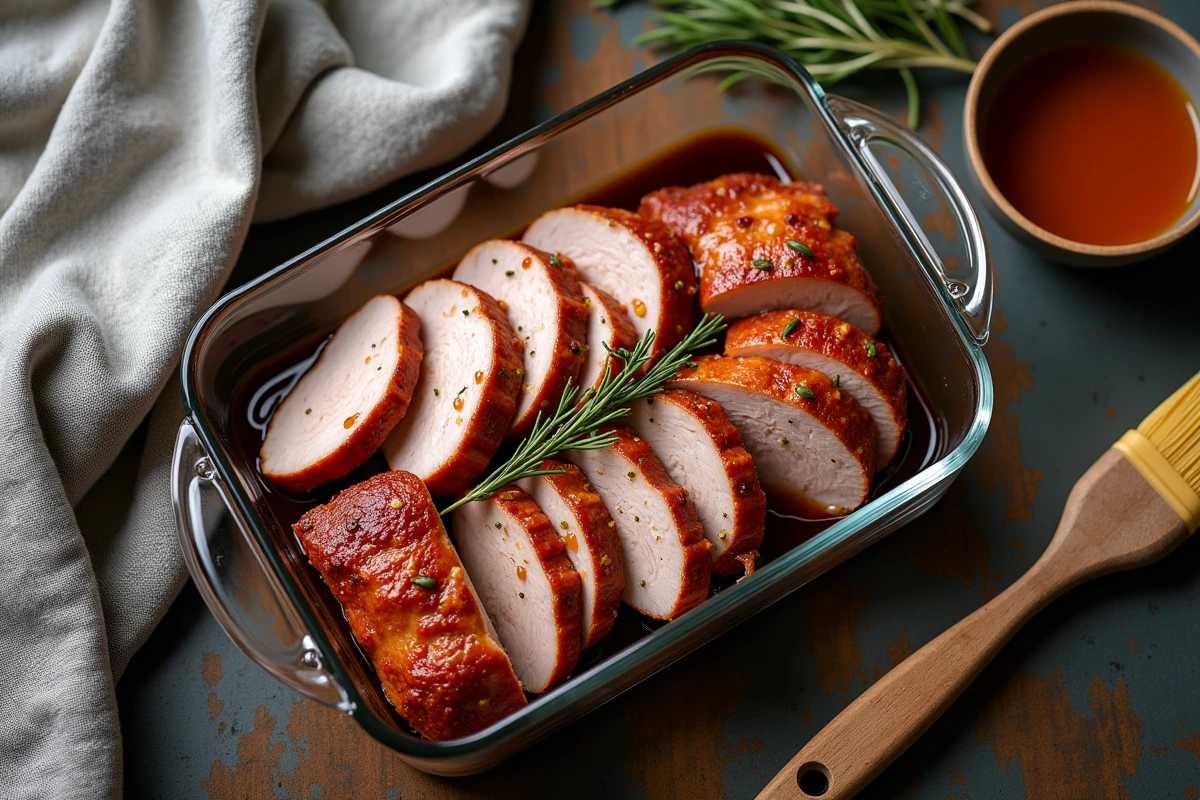
Adapting the method to the type of reheated meat
Not all meats react the same way to reheating. The level of intramuscular fat changes the game.
- Lean cuts (chicken breast, veal roast) lose moisture very quickly. The low-temperature oven with aluminum and added liquid (broth, cooking juices) is the safest method.
- Marbled cuts (ribeye, beef rib) tolerate heat better due to the fat that melts and lubricates the fibers. The low-temperature oven followed by a quick sear in a cast iron skillet works particularly well.
- Very fatty and shredded cuts (smoked brisket, ribs) can handle slow reheating without special protection, provided they finish with a brief period of high heat to regain crispness on the surface.
Food waste related to leftover meat decreases when reheating is mastered. Properly reheated meat is edible, while dried-out meat ends up in the trash. Portioning before storage, choosing the right method based on the cut, and respecting the single reheating cycle: these three reflexes are enough to turn a leftover into an appetizing meal.