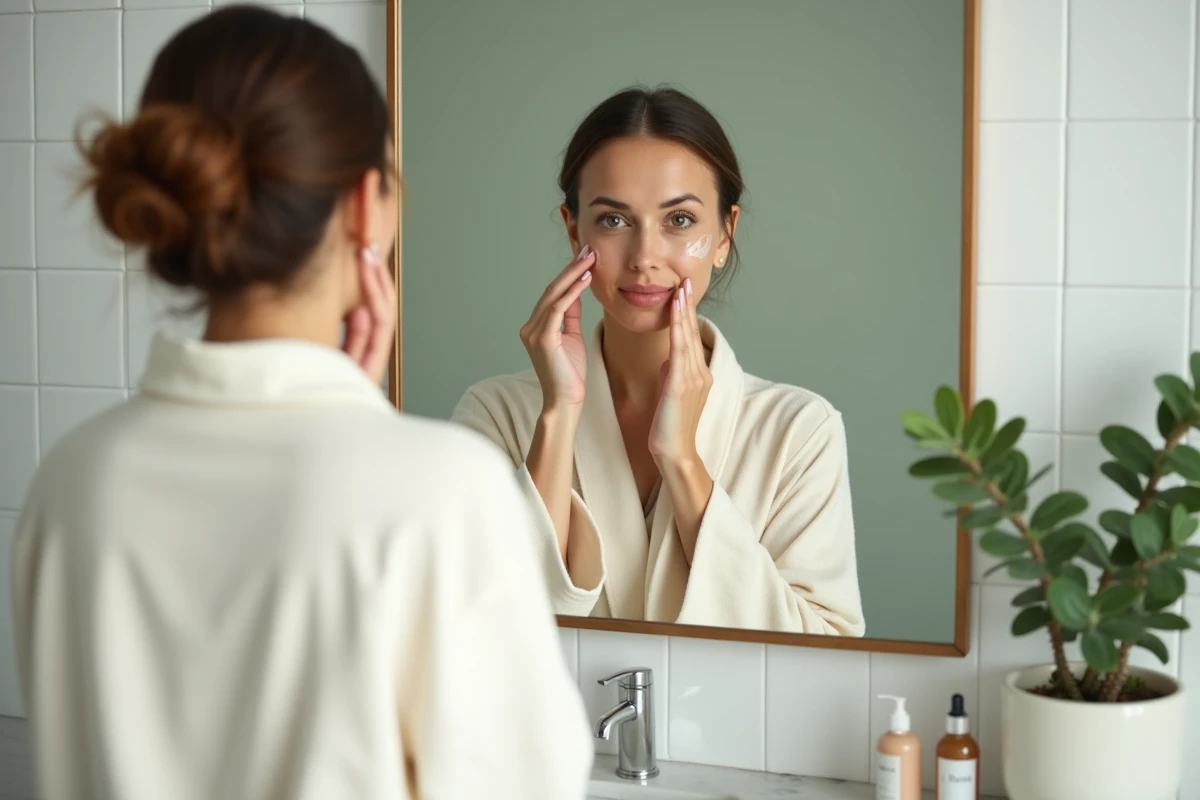
When you layer serum, cream, oil, and mist on a face that still feels tight after three weeks, the problem doesn’t come from the budget or the brand. It almost always stems from the order of application, the number of products, or a cleanser that is too harsh, sabotaging everything else. Elevating your beauty routine daily requires precise adjustments, not accumulation.
Skin Microbiome and Beauty Routine: The Parameter That Skin Doesn’t Forgive
We cleanse, we exfoliate, we apply concentrated actives, and yet the complexion remains dull or reactive. The priority to explore is the state of the skin microbiome, this population of protective bacteria that coats the surface of the skin.
For a few years now, dermatologists have emphasized one point: a cleanser that is too stripping (high pH foaming gel, regular soap) destroys part of this flora. The result is skin that overreacts, produces more sebum, or peels for no apparent reason.
To maintain this balance, you can discover beauty tips from Masca Online and remember a simple principle: a gentle cleanser with a pH close to that of the skin is sufficient morning and evening. Formulas with prebiotics or without harsh sulfates protect this bacterial film instead of stripping it away with each wash.
Exfoliation with acids (glycolic, salicylic) also deserves to be measured. Two to three times a week is a maximum for most skin types. Beyond that, you weaken the skin barrier and restart the irritation-sebum overproduction cycle.
Skinimalist Routine: Three Well-Chosen Products vs. Ten Poorly Combined
The skinimalist trend is not a passing fad. It is based on a shared observation from several cosmetic industry reports: reducing your routine to three or four targeted products decreases the risk of interactions between actives and limits chronic irritation.
The Foundation That Works for Most Skin Types
- A gentle cleanser (milk, cleansing oil, or sulfate-free gel), used morning and evening to remove sebum and pollution without stripping
- A concentrated serum suited to the main concern (hydration, radiance, imperfections), applied on slightly damp skin to enhance active penetration
- A moisturizing cream in the morning complemented by sun protection, or a single product combining both functions
You only add a fourth product if the skin truly demands it: an eye cream for pronounced dark circles, a plant oil in the evening if the skin feels tight after the cream. No “just in case” products.
The Order of Application Changes Everything
The rule has remained the same for years, yet we continue to ignore it: apply textures from the thinnest to the thickest. A serum applied after a rich cream barely penetrates. If using a sun care product, it always comes as the last step of the routine (before makeup).
Feedback varies on this point, but many professionals recommend waiting about thirty seconds between each layer. No need for a timer, just enough time for the product to no longer feel sticky to the touch.
Facial Actives: Combinations to Avoid Daily
Layering a vitamin C serum in the morning and then an exfoliant with glycolic acid in the evening may seem logical on paper. In practice, some combinations of actives neutralize each other or irritate the skin cumulatively.
Associations to watch closely:
- Retinol and exfoliating acids (AHA, BHA) on the same night: risk of redness, peeling, increased sun sensitivity
- Vitamin C and high-concentration niacinamide in the same application: recent formulations are more stable, but for sensitive skin, it’s better to separate them (morning and evening)
- Two serums with powerful actives applied at the same time: the skin can only absorb a limited amount, and the excess remains on the surface, creating an unwanted occlusive film
A useful guideline: only one strong active at a time of day. In the morning, prioritize antioxidants and sun protection. In the evening, reserve the slot for cell renewal (retinol, gentle acids).

Daily Sun Protection: The Most Cost-Effective Beauty Gesture
Sunscreen is not a beach product. It is the most documented anti-aging and anti-spot treatment available. Yet, we skip it as soon as the sky clouds over or when we stay indoors.
UV rays penetrate clouds and windows. Applying sun protection every morning, including in winter, protects the skin’s radiance much more effectively than using vitamin C serum alone.
The amount matters as much as the product: about the equivalent of a line on two fingers for the face and neck. Below that, actual protection drops significantly. If wearing makeup, sun mists or powders with UV filters allow for reapplication without starting over.
Internal Hydration and Facial Radiance: What Cream Cannot Replace
We invest in effective moisturizing treatments, but if water intake remains insufficient, the skin shows a tired complexion that even the best serum won’t correct. Drinking regularly throughout the day supports cell renewal and skin elasticity.
Diet plays a direct role in radiance. Foods rich in fatty acids (oily fish, avocado, nuts) and antioxidants (colorful fruits, green vegetables) nourish the skin from within. No supplement can compensate for an unbalanced plate over time.
Sleep remains the other underestimated pillar. It is during the night that the skin accelerates its regeneration. Sufficient sleep amplifies the effect of every treatment applied in the evening, not the other way around. An effective beauty routine starts with these fundamentals before seeking the latest trendy active.