The increase in sales of grain-free puppy food has coincided with the publication of several studies on nutritional deficiencies observed in certain alternative diets. Formulas devoid of wheat, rice, or corn are appealing, while animal nutrition specialists remind us of the importance of a strict balance in nutrient intake.
Notable differences appear based on the size, breed, and lifestyle of the puppy, making universal recommendations difficult to apply. Errors in meal composition can lead to subtle but lasting growth disorders. Practical advice evolves, but certain precautions remain essential.
The grain-free diet for puppies: understanding the trend and its origins
Food allergies and digestive issues in puppies lead many owners to turn away from traditional kibble. The grain-free diet for puppies then emerges as an alternative, perceived as more in line with the dog’s primitive diet. This popularity is based on health concerns, testimonials about shiny coats or better-formed stools, but also on a persistent suspicion towards grains, accused of causing soft stools and itching.
However, a closer look at veterinary studies tempers this wave: grains are not the universal culprit. When well chosen, they can even contribute to the balance of the puppy’s diet. Veterinarians emphasize that carbohydrates from good sources should not be banned, as long as the recipe meets the requirements for proteins, vitamins, and minerals.
The enthusiasm for the grain-free diet for puppies reflects both an evolution in expectations and a trend effect. Brands are aligning, multiplying “grain-free” references to cater to an informed clientele attentive to the composition of dog food. Before changing the contents of the bowl, it is better to rely on the veterinarian’s advice, a precise reading of the kibble’s composition, and the profile of each animal. To delve deeper, the file “the grain-free diet for puppies” answers the question: Is grain-free for puppies really essential?
What nutritional needs does a growing puppy have? Focus on mistakes to avoid
Growing requires a puppy diet designed to meet energy expenditure, bone strength, muscle mass building, and protection of a still fragile immune system. Too often, a “natural” diet is confused with what biologically suits a young animal.
It is animal proteins that build muscle; vitamins and minerals, including calcium and phosphorus, that ensure skeletal strength. Fats, such as those from flaxseed oil, contribute to the vitality and shine of the coat. Fibers from vegetables promote stable transit and limit the risk of diarrhea or digestive disorders.
To avoid the most common mistakes in a puppy’s diet, keep an eye on these points:
- The energy density of puppy kibble must be appropriate: too rich, the puppy gains weight too quickly; too poor, it risks long-term bone fragility.
- Improvised homemade preparations are rarely balanced in fibers, vitamins, and minerals: they expose the puppy to avoidable deficiencies.
- Monitor the puppy’s weight and energy at each stage of its growth.
A grain-free diet does not exempt from a rigorous balance. Formulas created for puppies meet the demands of this critical phase, far from approximations. Changing food overnight, neglecting protein intake, or underestimating the importance of fats for tissue building and immune defense: these are the mistakes that weigh on the animal’s robustness.
A puppy does not have the same needs as an adult or a senior. Every meal plays its part in the future health of the dog.
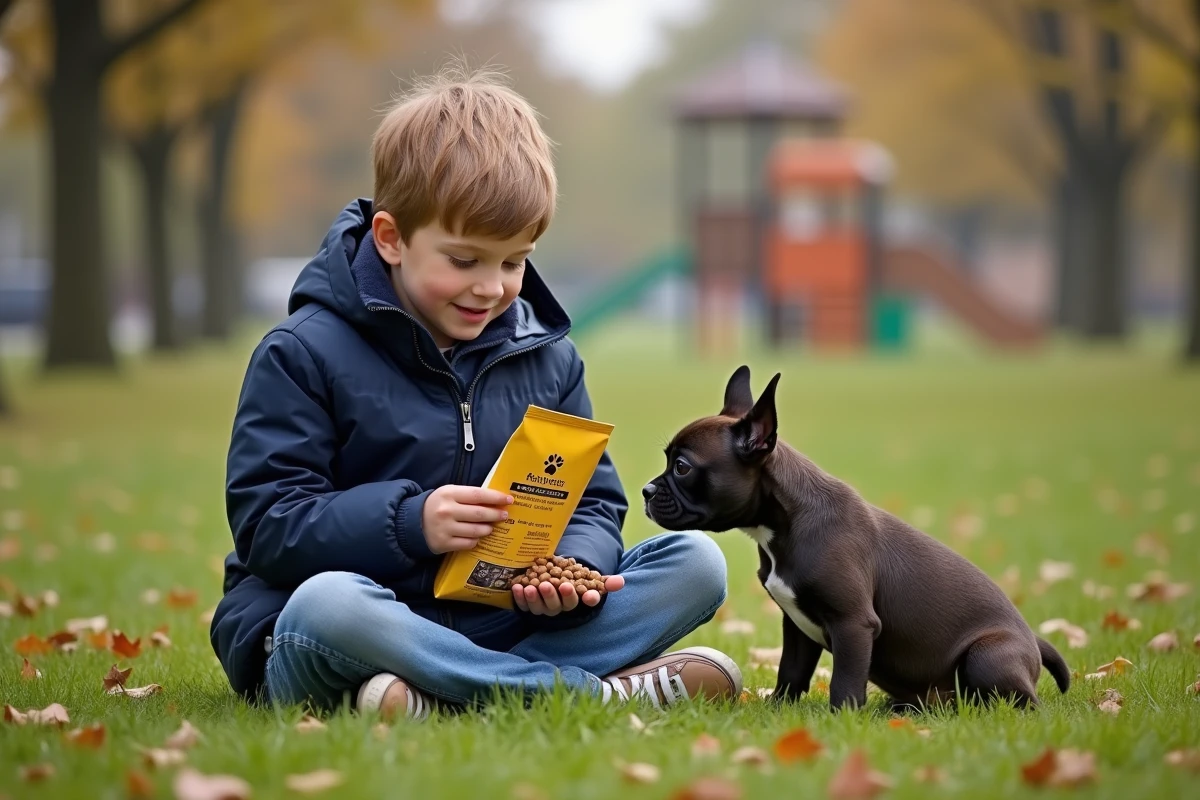
Adapting the diet to the breed and supporting the transition to adulthood: practical advice for your puppy’s health
The dietary transition to adulthood is not trivial. Each breed imposes its own rules: a labrador requires constant attention to its weight and fat intake, while small dogs do not tolerate variations in their puppy food well. These distinctions shape the long-term robustness of the animal.
Monitor the weight curve: any variation signals an imbalance or the need to adjust the ration. The switch to adult dog kibble should be done gradually, over about ten days, by progressively mixing the old and new food to protect digestion and limit soft stools. Observe the puppy’s behavior, its appetite, the texture of its coat, and the firmness of its stools.
- Adapt the dog food to its activity and the season: a very playful puppy or one exposed to the cold will need more energy.
- Consult a veterinarian to adjust the ration, monitor metabolism, and identify any potential intolerances.
The choice among the multitude of foods available requires clarity and guidance. Careful monitoring and precise adjustments, far from fleeting trends, are the foundations of a long and fulfilling life for your companion. The future of a puppy is built, bite by bite, at the crossroads of vigilance and kindness.