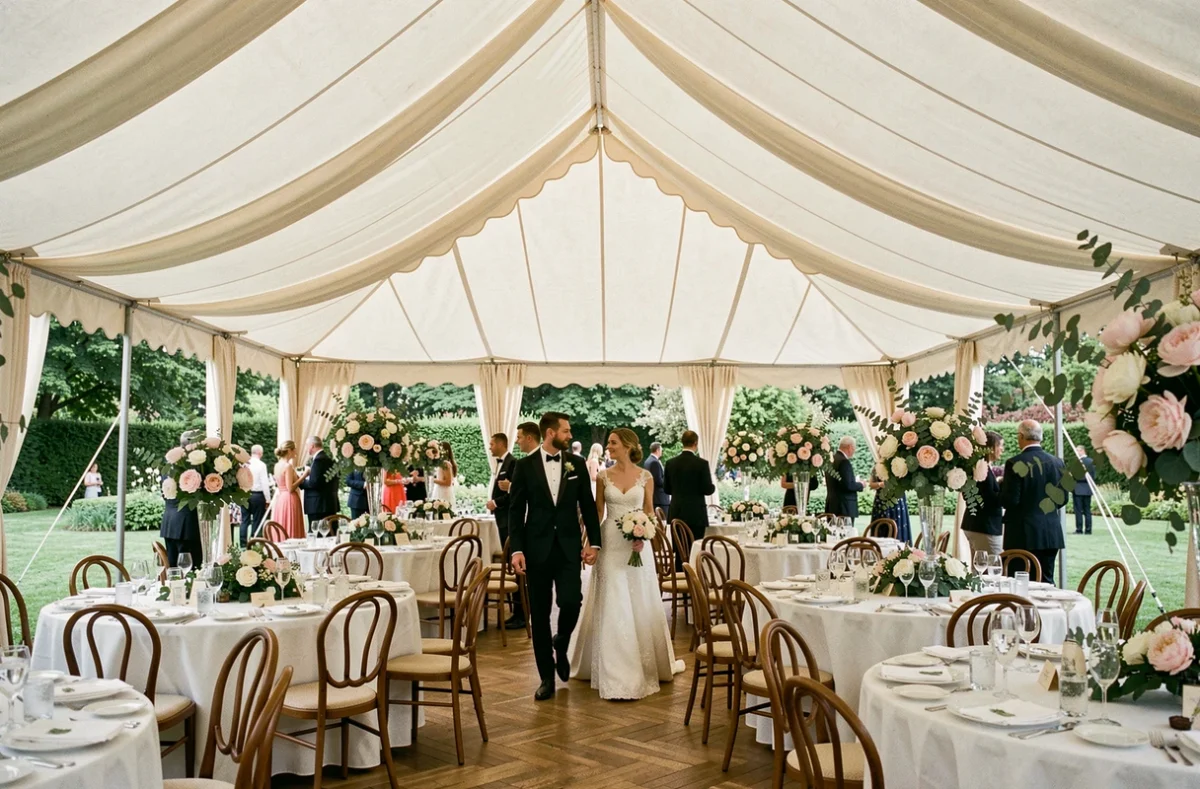
Choosing a wedding marquee in Paris involves making decisions on parameters that most guides do not address first: the legal status of the land, the regulatory threshold related to the number of guests, and nighttime acoustic constraints. These three variables determine the type of structure even before considering aesthetics or capacity.
Regulations for wedding marquees in Paris: what the threshold of 50 people changes
The Parisian regulatory framework imposes a clear distinction based on capacity. A marquee accommodating at least 50 people falls under the CTS regime (tents, marquees, and structures), a category of public establishment subject to specific obligations.
This threshold modifies the very nature of the project. Below it, a small reception tent can be set up with light formalities. Above it, the provider must supply a safety register, an approval number, and fire reaction certificates for the fabrics. CTS structures are subject to biennial periodic checks.
Before comparing models, it is therefore necessary to determine the maximum number of guests. This figure conditions not only the usable area but also the level of administrative requirements. To delve deeper into the criteria for a wedding marquee in Paris, the safety file remains the first document to examine when choosing a provider.
| Criteria | Less than 50 people | 50 people and more (CTS) |
|---|---|---|
| Mandatory approval | No | Yes |
| Safety register | Not required | Required |
| Fire reaction certificate for fabrics | Not systematic | Mandatory |
| Periodic checks | None | Biennial |
| Installation authorization | Depending on the location | May be required |
Land and occupancy authorization in Paris: the legal status of the location
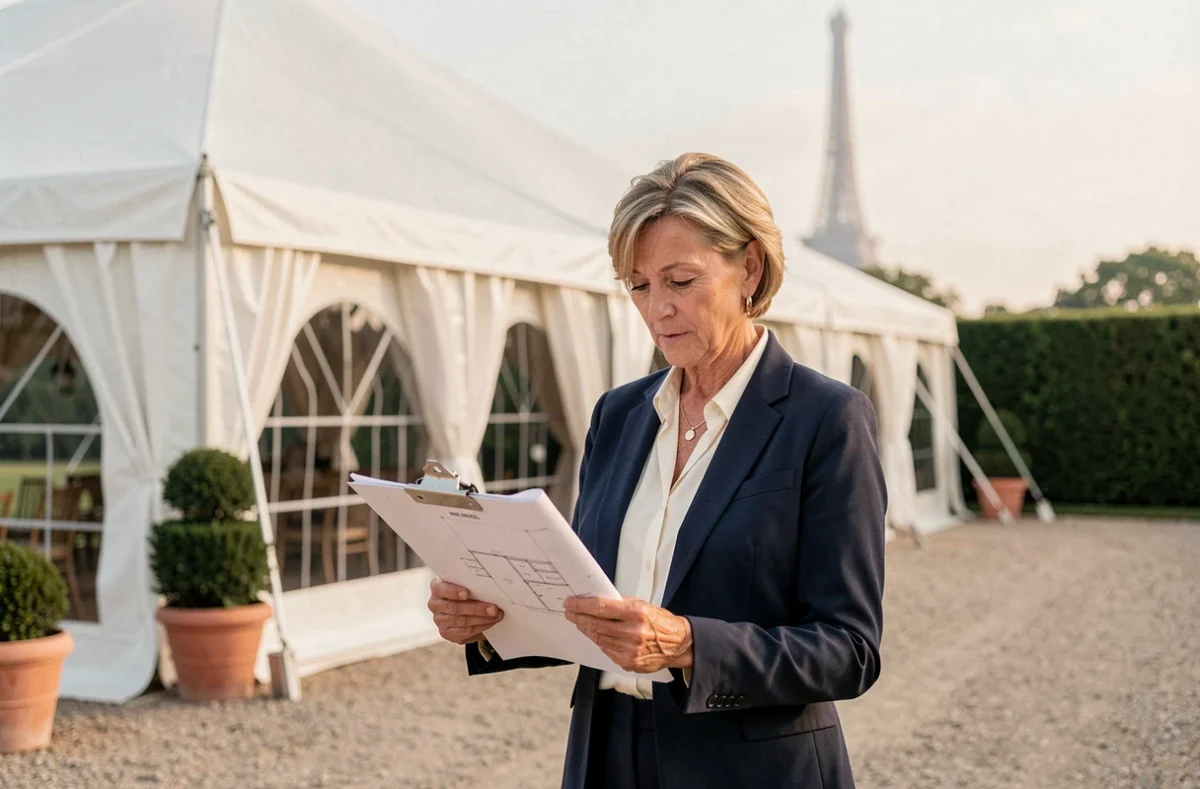
The choice of land is often more decisive than the shape of the marquee. In Paris, setting up on public land (sidewalk, square, green space) requires a temporary occupancy authorization issued by the town hall or prefecture.
A public event may also require a declaration to the police prefect. These procedures can take several weeks, sometimes longer during the summer when requests multiply.
Private domain or public space: two distinct logics
A private domain (castle park, private garden) simplifies formalities but imposes its own constraints: access for setup trucks, nature of the ground, proximity to water and electricity networks. On a dirt or sloped surface, laying a wooden floor significantly increases the budget.
In contrast, a public space in Paris sometimes offers an exceptional setting, at the cost of a heavier administrative file. Checking the legal status of the location before comparing models avoids discovering late that a marquee cannot be anchored in the intended location.
Acoustic constraints and reception hours in an urban environment
Sound systems and end-of-evening hours are a criterion of choice in their own right, often overlooked when selecting the marquee. Noise regulations distinguish two periods:
- Daytime period, from 7 AM to 10 PM, with a more tolerant sound emergence threshold.
- Nighttime period, from 10 PM to 7 AM, where limits are significantly stricter.
- In Paris, urban density makes neighborhood complaints frequent as soon as music continues past 10 PM.
This framework directly influences the type of structure. A marquee with thick fabric and closed walls attenuates sound propagation better than an open tent or a stretch structure without sides. If the reception plans for a DJ or band beyond 10 PM, the acoustic insulation capacity of the marquee becomes a technical parameter, not a decorative detail.
Safety documents to require from the provider before booking
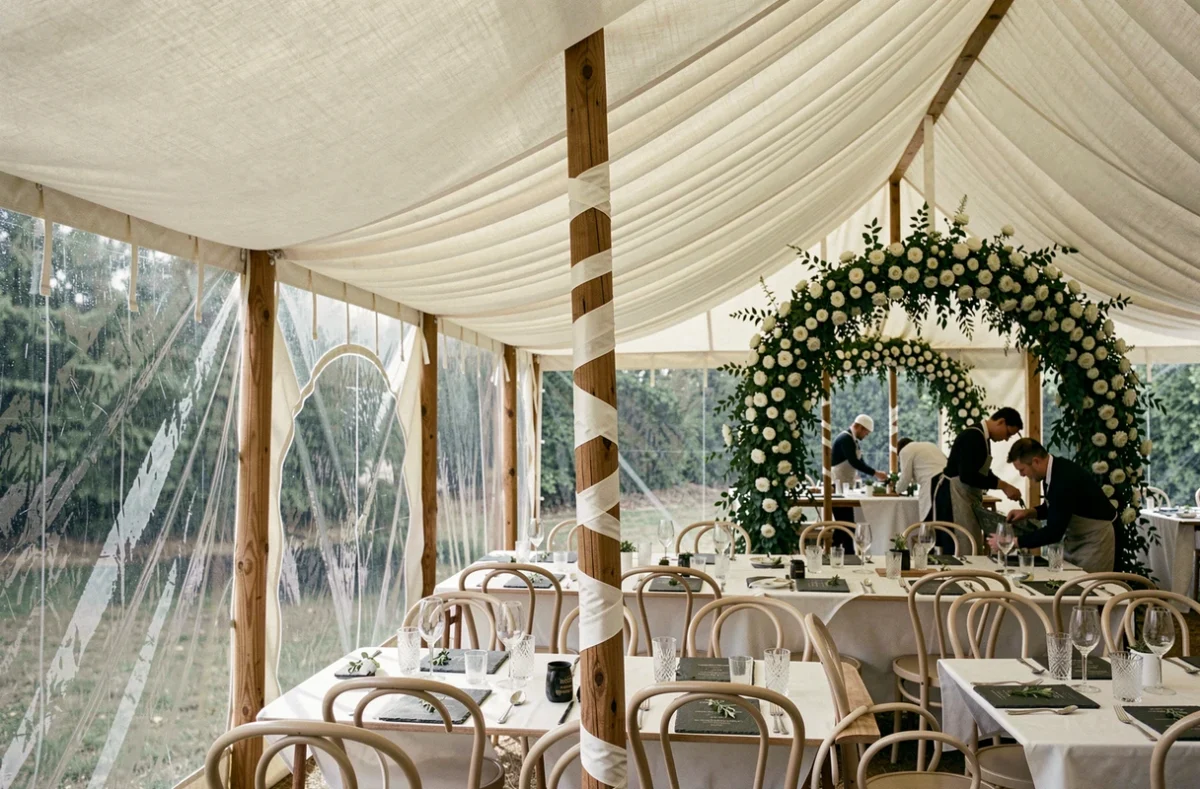
The safety file must be checked before booking, not on the day of setup. Too many couples discover regulatory requirements after signing a quote.
Here are the documents to systematically request from the marquee rental provider:
- The structure’s approval number, proving its compliance with CTS standards.
- The up-to-date safety register, including the results of the latest inspections.
- Fire reaction certificates for the fabrics and tarpaulins used.
- Stability and anchoring inspection reports, adapted to the type of ground planned.
A provider who refuses to provide these documents before signing should be dismissed. Responsibility in the event of an incident falls on the renter, but also on the organizer if checks have not been carried out.
Anchoring and stability according to Parisian soil
Parisian soils vary significantly from site to site. Anchoring by weighting (concrete blocks) is suitable for hard surfaces where staking is impossible. On grass or dirt, driven stakes ensure better wind resistance. The provider must adapt their anchoring method to the actual terrain, not propose a generic solution.
The combination of regulatory status, available land, and sound constraints forms the basis for any coherent decision regarding the marquee. A couple that addresses these three points in advance significantly reduces logistical surprises on the day of the reception.